
The Evolution of Mobile Phones: From Brick to Smart Devices
Mobile phones have dramatically evolved since their debut, transforming from bulky, purpose-specific devices to the multi-functional, slim smart phones that are now ubiquitous in daily life. This article delves into the fascinating journey of cell phones, exploring their history, technological advancements, and the societal shifts that these pocket-sized gadgets have instigated.
A Brief History of Mobile Phones
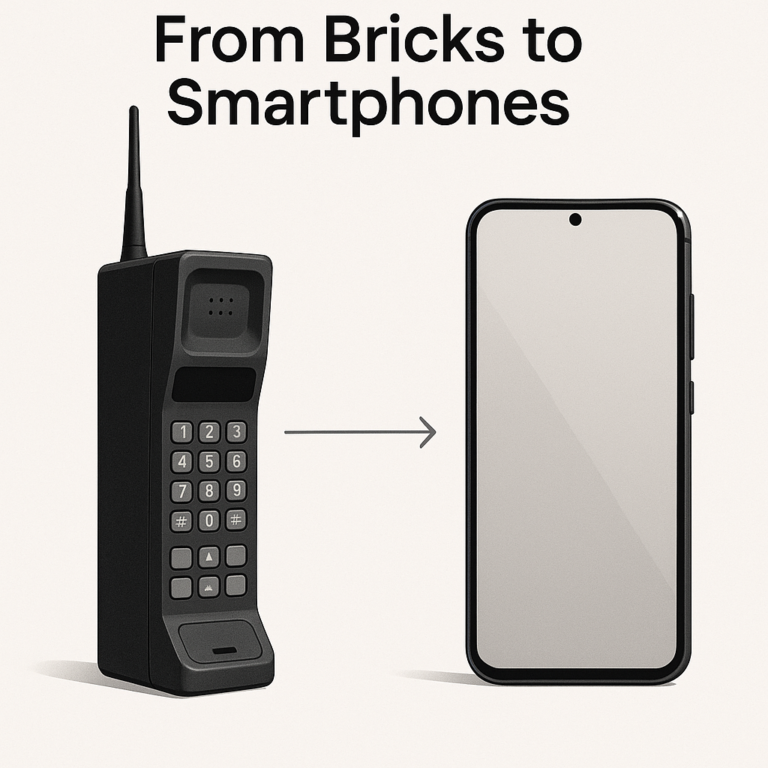
The inception of mobile phones dates back to the mid-20th century, but it was not until 1973 that the first ever portable handset was developed by Motorola. Martin Cooper, an engineer at Motorola, made history by making the world’s first public mobile phone call on a device that weighed a staggering 2.5 pounds. Dubbed the “brick phone,” the Motorola DynaTAC 8000X marked the beginning of a new communication era.
In the 1980s and 1990s, mobile phones slowly gained popularity, primarily among business professionals due to high costs and limited coverage. These early cell phones were mainly bulky, with antennas and monochrome displays, their only function being voice calls. The arrival of the 2G network and digital transmission in the early 1990s led to the birth of SMS or text messaging, adding a new dimension to mobile communication.
The Rise of Smart Phones
The late 1990s bore witness to the convergence of different technologies into a single handheld device. Mobile phones began to offer more than just calling capabilities — calendars, simple games, cameras, and even basic internet access became standard features. However, the real game-changer arrived with the introduction of “smart phones.” These devices seamlessly combined the functionalities of a phone with that of a personal digital assistant (PDA), opening up a universe of possibilities.
IBM’s Simon Personal Communicator, released in 1994, is often regarded as the world’s first smart phone. It featured a touchscreen, email capabilities, and even apps, albeit in a rudimentary form. But it was the launch of the Apple iPhone in 2007 and the subsequent proliferation of Android devices that cemented the place of smart phones in modern culture. Steve Jobs, co-founder of Apple, famously remarked, “Today, Apple is going to reinvent the phone.”
How Cell Phones Have Transformed Communication
The influence of mobile phones and smart phones goes far beyond convenience. These gadgets revolutionized the way people communicate, work, and access information. Today, voice calls are just a fraction of how most cell phone owners utilize their devices. Messaging apps, video chats, social media, and seamless access to multimedia content have made connectivity effortless and immediate.
According to a report by GSMA Intelligence, there are over 5.3 billion unique mobile phone users worldwide as of 2024, signaling nearly 68% penetration across the global population. The ability to communicate instantly, irrespective of geographical boundaries, has fundamentally reshaped both personal relationships and global business operations.
The Hardware Inside Your Mobile Phone
The technological sophistication within even the most affordable cell phones is remarkable. All smart phones are essentially tiny computers, equipped with microprocessors, memory chips, sensors, cameras, and high-resolution displays. Central Processing Units (CPU) and Graphics Processing Units (GPU), once exclusive to computers, now power everyday mobile devices, often enabling AI-assisted features.
Modern smart phones may feature up to 16GB of RAM, multiple camera sensors (sometimes exceeding 100 megapixels), and high refresh-rate screens for smooth visuals. Additionally, batteries have become more efficient, supporting features like fast charging and wireless charging. Connectivity options have also broadened, with 5G networks now enabling near-instant downloads and streaming.
Operating Systems: The Brain of Your Smart Phone
Behind the scenes, operating systems (OS) such as Android and iOS dictate what your mobile phone can do. iOS, exclusive to Apple devices, emphasizes security and user experience, while Android, developed by Google, is known for its customization and openness. The rivalry between the two has fostered rapid innovation, with regular software updates introducing new features and improvements.
App stores, such as the Apple App Store and Google Play Store, now host millions of applications, catering to every imaginable need—from productivity and health to gaming and photography. This application ecosystem ensures that smart phones remain versatile companions, adapting to the ever-changing digital landscape.
Security and Privacy in the Age of Mobile Phones
As mobile phones have become an integral part of everyday lives, concerns regarding privacy and data security have surfaced. Smart phones carry immense amounts of personal data, including contacts, financial information, location history, and even biometric identifiers such as fingerprints or facial data.
To counter these risks, device manufacturers and software developers have implemented robust security measures such as end-to-end encryption, fingerprint and facial recognition, secure enclaves, and frequent security patches. Users are encouraged to stay vigilant by updating their devices, using strong passwords, and exercising caution when downloading apps.
A 2023 Pew Research Center survey found that 72% of adults expressed concern about personal data collected by smart phones. As devices become even more connected, the debate around data privacy is set to intensify, making security a pivotal area of research and development.
The Future of Mobile Phones
The future of mobile phones is shaped by relentless innovation. Foldable phones, once the stuff of science fiction, are already on sale, offering larger screens without sacrificing portability. Augmented reality (AR) and virtual reality (VR) functionalities are being integrated into smart phones to deliver immersive experiences in gaming, education, and professional settings.
Artificial Intelligence (AI) is poised to play a transformative role, optimizing performance, enhancing photography, driving voice assistants, and delivering personalized experiences. Moreover, the progression toward a fully interconnected “Internet of Things” (IoT) envisions mobile phones controlling appliances, vehicles, and even smart cities.
Industry analysts predict that future cell phones will not just be communication tools but “remote controls for life,” acting as passports, wallets, medical monitors, and more.
The Environmental Impact of Mobile Phones
While the utility of cell phones is undeniable, it’s important to consider their environmental footprint. Production of smart phones involves the extraction of rare earth minerals, significant energy usage, and the generation of electronic waste. The average lifespan of a mobile phone is just two to three years, fueling a cycle of disposal and replacement.
Manufacturers are beginning to address these concerns by offering recycling programs, using recycled materials, and designing phones with longer lifespans and replaceable components. Advances in battery technology, energy efficiency, and alternative materials are also being explored to lessen the ecological impact.
As consumers, being mindful of cell phone recycling and choosing sustainable options can contribute to a greener future.
Mobile Phones in Society: Empowerment and Connectivity
The democratization of mobile phones has brought profound societal changes. For billions, particularly in developing regions, cell phones have become gateways to education, healthcare, and economic opportunity. From facilitating mobile banking in Africa to delivering remote healthcare consultations in rural India, smart phones are bridging digital divides and enhancing livelihoods.
Moreover, mobile phones have been pivotal tools in global social and political movements. They provide a platform for voices often unheard, enabling individuals to share information, mobilize support, and demand accountability.
Bill Gates summarized their importance succinctly: “The cell phone is becoming the remote control for our lives.”
Conclusion
The journey of mobile phones from cumbersome gadgets to indispensable smart phones mirrors the rapid pace of technological, social, and cultural transformation over the past few decades. As these devices continue to evolve, they promise even greater connectivity, convenience, and capability. Whether for communication, work, entertainment, or activism, cell phones are now firmly woven into the fabric of modern existence—tiny yet powerful symbols of the digital age.
