
The Evolution of Mobile Phones: From Brick to Smart Companion
Mobile phones have dramatically reshaped how we communicate, access information, and interact with the world. What started as bulky, basic communication tools have evolved into sleek, powerful smart phones, becoming virtually indispensable in modern society. Let’s explore the journey of cell phones, how they transformed into smart companions, and their impact on our daily lives.
The Dawn of Mobile Phones: Humble Beginnings
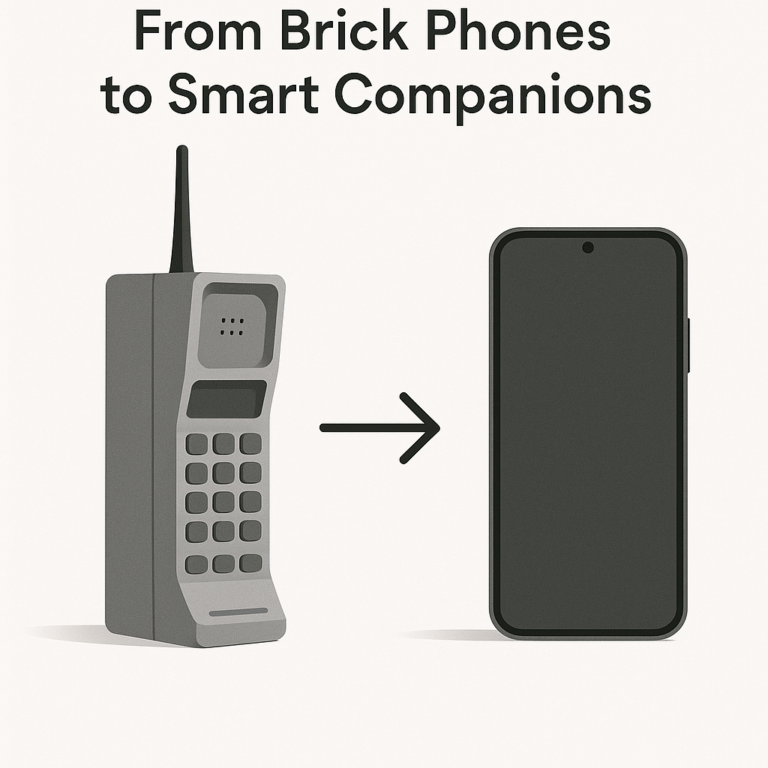
The history of mobile phones stretches back to the 1970s, when early prototypes resembled heavy bricks with minimal functionality. The world’s first mobile phone call was made by Martin Cooper, a Motorola executive, in 1973 using the DynaTAC 8000X. This first-generation cell phone weighed nearly 2.5 pounds and offered under an hour of talk time after a 10-hour charge. Nevertheless, it marked the beginning of a revolution in personal communication.
During the 1980s and early 1990s, mobile phones remained niche due to their large size, limited battery life, and high cost. They were mainly used by business professionals and the wealthy elite. However, technological advancements led to steady reductions in size and improvements in battery life, accessibility, and affordability.
The Rise of Cell Phones: Making Communication Ubiquitous
The late 1990s saw a boom in cell phone adoption. Companies like Nokia, Ericsson, and Motorola began introducing more compact, reliable, and affordable options. Features like SMS messaging, rudimentary games (with Snake on Nokia phones becoming a cultural staple), and monochrome displays further increased their appeal.
A defining moment came with GSM (Global System for Mobile Communications), enabling cross-network text messaging and international roaming. The ability to communicate across nations using a single device transformed cultural and business opportunities.
The Smart Phone Revolution
The transition from mobile phones to smart phones began subtly in the late 1990s with devices like the Nokia 9000 Communicator and BlackBerry’s early models, which combined calling capabilities with email and basic web browsing. However, the true smart phone revolution ignited in 2007 with the introduction of the Apple iPhone.
Steve Jobs famously said, “Today, Apple is going to reinvent the phone.” The iPhone’s intuitive touchscreen, absence of physical keypad, and integration of an internet browser, camera, and multimedia features set a new standard. Google’s Android platform soon followed, fostering competition that rapidly pushed the boundaries of what smart phones could achieve.
Today, smart phones are miniaturized computers, featuring powerful processors, high-resolution displays, multiple cameras, GPS, and access to millions of applications via digital app stores. They serve as communication tools, productivity devices, entertainment centers, and information portals.
Key Features of Modern Mobile Phones
1. **Touchscreen Displays:** Replacing physical keys, capacitive touchscreens became the norm, enabling easy navigation and rich visual experiences.
2. **Advanced Cameras:** The evolution from grainy images to professional-grade multi-lens systems has made photography a central focus. Leading smart phones now rival dedicated cameras.
3. **App Ecosystems:** Application stores like Apple’s App Store and Google Play allow users to customize their smart phones for productivity, entertainment, health, finance, and more.
4. **Connectivity Options:** Beyond voice calls and SMS, modern smart phones support 4G and 5G connectivity, Wi-Fi, Bluetooth, and NFC, powering a new era of fast, seamless digital interactions.
5. **Biometric Security:** Fingerprint and facial recognition safeguard sensitive data, enhancing both convenience and privacy.
6. **AI and Voice Assistants:** Features like Siri, Google Assistant, and Alexa leverage artificial intelligence to provide hands-free help, answer questions, and automate tasks.
The Impact of Smart Phones on Society
The widespread adoption of smart phones has had profound impacts. They have democratized internet access, bridged communication gaps, and unlocked new opportunities in education, healthcare, and business. According to Pew Research Center, over 85% of adults in many developed countries own a smart phone—a figure that continues to climb globally.
**Communication and Social Connectivity:** Platforms like WhatsApp, Telegram, and social networks allow real-time communication across the globe, shrinking distances between loved ones and enabling global collaborations.
**Access to Information:** With a smart phone, answers to nearly any question are at one’s fingertips. News, weather, directions, and educational resources are instantly accessible, fostering a more informed population.
**Healthcare Advances:** Telemedicine, fitness tracking, and health monitoring apps empower individuals to take control of their well-being, bridging gaps in healthcare access.
**Economic and Business Innovation:** Mobile banking, e-commerce, and the gig economy are powered by smart phones, opening new avenues for entrepreneurship and income generation.
Challenges and Concerns in the Age of Smart Phones
While cell phones have changed life for the better in many ways, they’ve also introduced significant challenges:
1. **Privacy and Data Security:** Smart phones collect vast amounts of personal data, making users vulnerable to data breaches and surveillance.
2. **Screen Addiction:** Concerns about addiction to social media, gaming, and mobile entertainment are mounting, with potential impacts on mental health and productivity.
3. **Digital Divide:** While adoption is soaring, disparities in access remain, particularly in rural or low-income communities. Bridging this digital divide is an ongoing challenge.
4. **E-Waste:** The rapid cycle of upgrades leads to mounting electronic waste, raising environmental concerns about manufacturing and recycling.
The Technological Horizon: What’s Next for Mobile Phones?
Innovation in smart phones shows no signs of slowing. Foldable displays, under-display cameras, and advanced biometric sensors are already making waves. With 5G and, in the future, 6G connectivity, mobile phones will become even more integral to the Internet of Things (IoT), connecting everything from cars to home appliances.
“Mobile is not the future, it is the now. Meet your customers in the environment of their choice, not where it’s convenient for you,” said Cyndie Shaffstall, highlighting the instant and ever-present nature of cell phones in our lives.
Artificial intelligence continues to scale, bringing enhanced computational photography, real-time language translation, and personalized user experiences. Augmented reality (AR) and virtual reality (VR) applications are setting the stage for immersive new ways to learn, play, and interact.
Mobile Phones in Daily Life: Practical Tips and Considerations
As we become more dependent on smart phones, making informed choices is crucial for getting the most out of these devices:
1. **Battery Life:** Choose devices with robust battery performance, and practice good charging habits to extend longevity.
2. **Secure Your Device:** Use complex PINs, enable biometric security, and be cautious of public Wi-Fi networks.
3. **Reduce Screen Time:** Leverage digital wellbeing tools to manage usage and maintain a healthy relationship with your device.
4. **Prioritize Software Updates:** Regularly update your operating system and apps to minimize security risks and access the latest features.
5. **Sustainable Disposal:** When upgrading, recycle your old phone responsibly or consider trading it in to reduce e-waste.
The Cultural Impact: How Mobile Phones Have Changed Society
The influence of mobile and smart phones extends far beyond technology—they have profoundly altered culture and human behavior.
**Photography and Self-Expression:** With cameras always at hand, moments can be instantly captured and shared, enabling new forms of storytelling and self-expression.
**Education and Learning:** Mobile phones provide access to e-books, courses, and language learning apps, transforming education accessibility worldwide.
**Civic Engagement:** Cell phones have proven vital in citizen journalism and activism, allowing for swift documentation of events, organizing movements, and raising awareness for causes around the world.
**Entertainment On-the-Go:** With streaming services, podcasts, and games, mobile phones are primary entertainment platforms, turning downtime into fun time.
Conclusion: The Ever-Evolving World of Mobile Phones
From their inception as unwieldy communication devices to their current status as indispensable smart phones, mobile phones have revolutionized nearly every aspect of modern life. As technology continues to advance, the capabilities of cell phones will only expand, further embedding them in the fabric of daily existence.
The journey of mobile phones reflects humanity’s relentless drive for connection and convenience—but with that power comes responsibility. By understanding their history, features, and impacts, we can make the most of these remarkable devices while navigating the challenges they bring.
As we look ahead, one thing remains clear: mobile phones are not just devices—they are the gateways that connect us to each other and the world, wherever we go.
