
The Evolution of Mobile Phones: From Basic Communication to Multifunctional Smart Devices
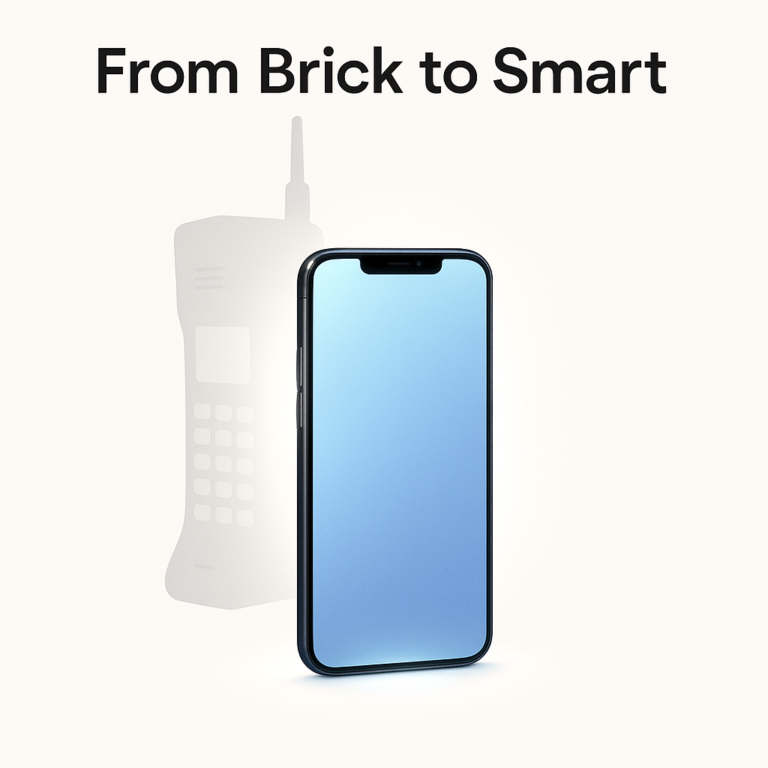
In just over four decades, mobile phones have woven themselves into the very fabric of modern society. What began as bulky, basic communication devices have evolved into slim, powerful smart phones capable of complex tasks and connecting people globally in ways once reserved for science fiction. The storytelling of mobile phones’ journey is not just a testament to technological innovation but a reflection of societal shifts and the ever-growing need for instant communication.
The Dawn of the Mobile Phone Era
The first commercially available cell phone, the Motorola DynaTAC 8000X, was released in 1983. Weighing almost two pounds with a battery life measured in minutes rather than hours, it was a marvel of its time albeit an expensive one. The term “cell phones” itself originated from the cellular network architecture these devices relied on, where service areas were divided into “cells,” each serviced by its own tower.
In the 1980s and early ’90s, owning a mobile phone was a status symbol, largely limited to business professionals and the wealthy. Voice calling was the primary function, with early text messaging (SMS) arriving in the mid-1990s. These phones featured monochrome displays, physical keypads, and, later on, rudimentary games like Snake—features that seem primitive by current standards but were revolutionary back then.
From Feature Phones to Early Smart Phones
“Feature phones” marked the next phase of development in mobile technology. They were smaller, more affordable, and introduced features like cameras, color screens, and multimedia messaging (MMS). Brands like Nokia, with its indestructible 3310, and Motorola, with the iconic Razr flip phone, became household names.
The term “smart phones” first gained traction in the late 1990s and early 2000s as devices began integrating more advanced computing capabilities. IBM’s Simon Personal Communicator, launched in 1994, was arguably the first smart phone, although the BlackBerry and Palm Treo lines truly pioneered smart phones into the mainstream. These early smart phones combined phone and PDA (personal digital assistant) functionalities, offering email, calendars, and basic browsing. BlackBerry, in particular, became synonymous with business communication, with its full QWERTY keyboard and “push” email system.
The Era of the Modern Smart Phone
A seismic shift in mobile technology occurred in 2007 with the introduction of Apple’s iPhone. “Every once in a while, a revolutionary product comes along that changes everything,” proclaimed Steve Jobs during the launch, and he wasn’t exaggerating. The iPhone’s capacitive touchscreen, intuitive user interface, web browsing capabilities, and support for third-party applications transformed user expectations overnight.
Google’s Android operating system entered the fray shortly afterward, democratizing the smart phone experience and igniting fierce competition. Brands like Samsung, HTC, and Motorola embraced Android, making smart phones accessible at every price point. With each new model, smart phones eclipsed their basic communication origins, morphing into handheld computers, cameras, music players, gaming consoles, and personal organizers—often all at once.
How Mobile Phones Are Changing the World
The global proliferation of mobile phones is nothing short of astounding. As of 2024, there are more than 8.5 billion mobile subscriptions worldwide—more than the world’s population, as many people own multiple devices. Smart phones account for a significant portion of these subscriptions, thanks to falling prices and expanding mobile networks in developing countries.
Smart phones have fundamentally changed the way people communicate. Messaging apps like WhatsApp and WeChat allow instant and cost-effective communication across continents. Video calls and conferencing make remote work and long-distance relationships more interconnected than ever. Social media, enabled primarily by mobile devices, reshapes how news is consumed and how communities are built.
But the impact goes even deeper. Banking, telemedicine, education, and shopping have all been transformed through mobile applications. In rural areas or developing economies, a single cell phone in a household can provide access to educational materials, banking services, and health information that was previously out of reach. For example, mobile banking services like M-PESA in Kenya have revolutionized finance for millions of people.
The Technology Behind Today’s Mobile Phones
The modern smart phone is an impressive feat of engineering. At its core, it is a powerful computer, bearing immense processing power packed into a sleek device that fits comfortably in a pocket. Central processing units (CPUs) and graphics processing units (GPUs) that were once reserved for desktop computers now reside in the latest mobile phones, delivering console-quality gaming and seamless multitasking.
Touchscreens have evolved from basic resistive displays to highly responsive capacitive panels supporting millions of colors, high refresh rates, and even under-display fingerprint sensors. Camera technology has seen equally astonishing leaps: from single-lens modules to sophisticated multi-lens systems with AI-assisted enhancements that can record Ultra HD video, capture night scenes, and even produce professional-grade portraits.
Battery technology, wireless charging, biometric security (such as facial recognition), waterproof builds, and near-field communication (NFC) are just a few of the innovations packed into modern devices. 5G connectivity, now increasingly widespread, ushers in faster download speeds, lower latency, and the promise of more immersive experiences—fueling everything from augmented reality (AR) to the Internet of Things (IoT).
The Mobile Ecosystem: Apps, Accessories, and Beyond
A smart phone’s utility is magnified by an expansive ecosystem of software and hardware accessories. The Apple App Store and Google Play have collectively hosted millions of applications, catering to every imaginable need and interest—from productivity and creativity to fitness and lifestyle.
Accessories like wireless chargers, Bluetooth earbuds, protective cases, and even VR headsets contribute to the personalized experience. Wearables such as smart watches allow users to access notifications or monitor their health metrics with ease, further blurring the line between phone and personal assistant.
“Mobile is the future, and there’s no such thing as communication overload,” wrote Eric Schmidt, former CEO of Google. This quote encapsulates the core philosophy guiding the mobile industry’s relentless innovation—delivering more, faster, and with greater personalization.
Security, Privacy, and Challenges
With the expanding capabilities of mobile phones come increased responsibilities and risks. Smart phones store vast troves of sensitive personal data, from banking credentials to health records. Cybersecurity is of paramount concern; threats like phishing, malware, and spyware increasingly target mobile devices. Operating system developers continually roll out updates and security patches to stave off potential vulnerabilities, but user awareness remains crucial.
Privacy is another growing topic. Application permissions, location sharing, digital footprints, and advertising trackers have made the user’s personal data a valuable commodity. Governments and tech companies grapple over how best to balance user convenience with privacy rights, spawning new regulations like Europe’s GDPR.
The Environmental Impact of Cell Phones
Another frequently discussed aspect is the environmental footprint of mobile phones. The manufacturing processes require rare earth minerals and generate electronic waste, often under conditions that can be harmful to workers and the planet. Manufacturers are responding with sustainability initiatives, such as recycling programs, longer software support, and eco-friendly materials. Consumers, too, are becoming more conscious, with a growing market for refurbished devices and trade-in programs.
Future Trends in Mobile Phones
Looking ahead, the mobile phone industry is poised for more innovation. Foldable displays, once a novelty, are becoming mainstream. Advances in artificial intelligence, edge computing, and quantum cryptography hint at new possibilities in security and performance. Additionally, mobile phones may serve as hubs for an expanding digital lifestyle, connecting and controlling everything from household appliances to autonomous vehicles.
Integration with health technology is another rising trend, as sensors and software make smart phones critical tools for wellness and diagnostics. The mobile phone’s role in augmented and virtual realities will also expand as 5G and subsequent technologies mature.
Conclusion: The Ubiquitous Journey of Mobile Phones
The journey of mobile phones from clunky, utilitarian gadgets to sleek, indispensable smart phones marks one of the defining technological evolutions of our era. They are more than mere communication devices; they are cameras, computers, navigators, health monitors, and social connectors rolled into one. As technology continues to march forward, the smart phone will undoubtedly remain at the forefront of innovation, shaping not only how we connect but how we live, work, and even imagine the future.
