
The Evolution of Mobile Phones: A Journey from Brick to Smart Devices
In the world of technology, perhaps no device has changed human behavior as drastically as the mobile phone. From their humble beginnings as bulky gadgets for voice communication, mobile phones have morphed into the sleek, powerful smart phones we rely on today. Across continents, ages, and cultures, cell phones have become irreplaceable—it’s difficult to imagine modern life without them.
From the Early Days: The Birth of Mobile Communication
The story of mobile phones begins in the mid-20th century. The first mobile devices were anything but portable by today’s standards. Consider the Motorola DynaTAC, launched in 1983: weighing nearly two pounds and offering just 30 minutes of talk time, it cost almost $4,000. Yet, this “brick phone” was revolutionary. It untethered communication from fixed landlines, laying the foundation for the mobile revolution.
By the late 1980s and early 1990s, mobile phones became more accessible. Companies like Nokia, Motorola, and Ericsson competed to produce smaller, lighter, and more affordable cell phones. Models such as the Nokia 3310 achieved legendary status for their durability and long battery life—traits that remain fondly remembered even today.
Entering the Era of Smart Phones
The true transformation began with the advent of smart phones. The first device to combine mobile telephony with computing features (calendar, email, simple games) was the IBM Simon in 1994. Although primitive by today’s standards, it pointed towards the convergence of technologies that would define the future.
However, it was the launch of Apple’s iPhone in 2007 that redefined what mobile phones could be. The iPhone introduced a capacitive touchscreen, an app-based interface, and internet browsing all in one sleek device. As Steve Jobs famously said, “Today, Apple is going to reinvent the phone.” More than just a communication tool, the smart phone became an entertainment system, productivity device, navigation tool, and social connector.
Soon after, Android made its debut, providing a flexible and customizable platform. Brands like Samsung, HTC, and later Xiaomi and OnePlus, brought about fierce competition and rapid innovation. The convergence of high-resolution cameras, powerful processors, and app ecosystems cemented the smart phone as an essential gadget.
Modern Features and Daily Impact
Today’s cell phones are miniature supercomputers. With processors rivaling some laptop computers, and up to 12GB or even 16GB of RAM in flagship models, smart phones handle demanding games, extensive multitasking, and even video editing.
Cameras embedded in phones boast capabilities once reserved for professionals: multiple lenses, optical zoom, night mode, and 8K video recording. Mobile banking, contactless payments, health tracking, language translation, and augmented reality—all are standard fare on the latest devices.
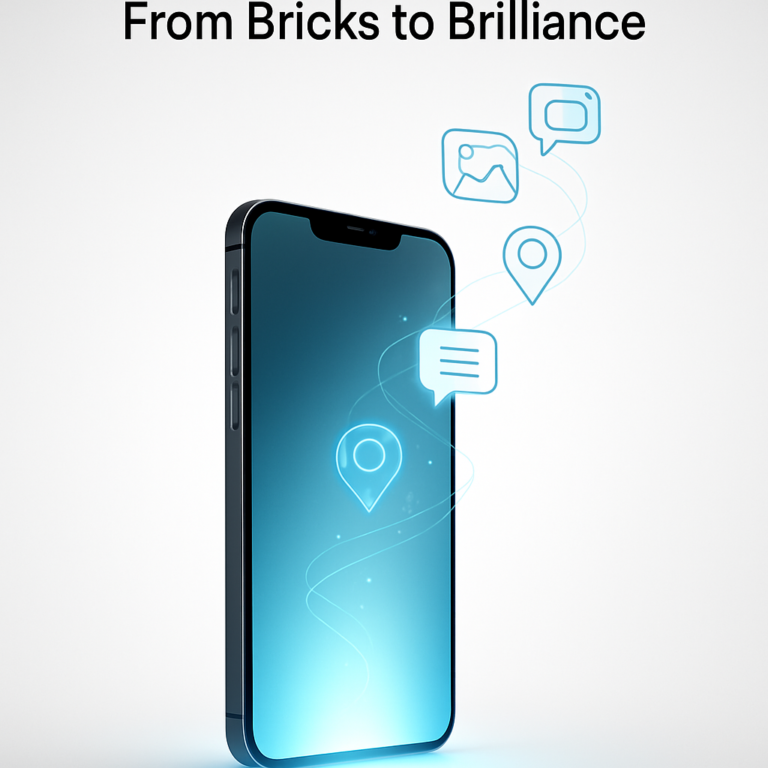
Mobile phones are more than just a tool; they have woven themselves into daily routines. Studies find that the average person checks their smart phone over 90 times per day, signaling their role as our go-to device for news, connection, productivity, and leisure. Messaging apps, social networks, music streaming, and navigation have all become mobile-first experiences.
The Rise of Mobile Internet and App Culture
The proliferation of 3G, 4G, and now 5G networks has unlocked the true potential of mobile phones. With high-speed internet everywhere, we can stream high-definition films, conduct video calls, and play real-time multiplayer games from nearly anywhere on earth. The “App Economy” has spawned millions of jobs and billions in revenue, with developers around the globe building games, utilities, and platforms tailored for smart phones.
Mobile-first applications like Instagram, Snapchat, and TikTok have revolutionized how we share and consume content. Shopping, banking, dating, and even healthcare are now largely managed through cell phones.
Connecting the Unconnected: Mobile Phones and Global Impact
Perhaps the most profound effect of mobile phones has been their ability to connect previously unconnected populations. In regions where traditional infrastructure is lacking, smart phones bridge the digital divide. Mobile money services like Kenya’s M-PESA have transformed economies by providing safe, accessible banking to the unbanked.
Educational apps, telemedicine, and agricultural support systems delivered through cell phones empower people and foster development. The United Nations even lists mobile connectivity as a key driver for several Sustainable Development Goals.
Design Innovations and Future Trends
Design has played an enormous role in the appeal of mobile phones. From the flip phones of the 1990s to today’s edge-to-edge glass displays, manufacturers continuously refine forms and features. The shift to larger displays and minimized bezels was driven by demand for better video and browsing experiences.
Recently, foldable smart phones have entered the scene, combining portability with larger screen real estate. Biometric security, such as facial recognition and in-display fingerprint sensors, heighten both convenience and security.
Looking forward, experts predict even more radical changes. The integration of artificial intelligence (AI) has already begun, powering photography, voice assistants, and predictive text. As 5G networks mature, the “Internet of Things” will flourish—smart phones will serve as the universal hub for controlling smart homes, vehicles, and even health monitoring devices.
There’s also increasing research into alternative form factors. Some companies are experimenting with rollable displays, while others envision seamless augmented reality overlays via wearable smart glasses paired with mobile phones.
Ethical Considerations and Environmental Impact
While mobile phones offer immense benefits, they also pose challenges. E-waste is a growing concern: with billions of devices sold each year, outdated or discarded cell phones can harm the environment if not properly recycled. Manufacturers are now taking steps to improve sustainability, such as using recycled materials, offering trade-in programs, and designing phones for easier repair.
Privacy and data security remain critical issues. With so much personal information stored on smart phones, robust encryption and transparent data policies are a must. Consumers are growing more aware of digital rights, prompting companies to provide better control over data usage and permissions.
The Social Impact: How Mobile Phones Shape Society
Mobile phones have profoundly influenced how we interact. While they make it easier than ever to stay connected, critics warn of potential downsides—reduced face-to-face interaction, digital addiction, and the spread of misinformation. The phrase “phubbing,” or snubbing someone in favor of your phone, has entered the cultural lexicon.
On the positive side, cell phones have become vital tools in activism and emergency response. From organizing protests to aiding disaster recovery, mobile technology has empowered ordinary people to take action, document events, and share critical information in real time.
As Bill Gates once remarked, “The cell phone is becoming the universal remote control for our lives.” This reality brings both convenience and new responsibilities for users and makers alike.
Conclusion: The Indispensable Device of Our Age
The journey of mobile phones from cumbersome tools to indispensable smart phones is one of breathtaking innovation and profound impact. They are now a gateway to the world, placing knowledge, connection, entertainment, and opportunity in the palm of our hands.
As we look to the future, cell phones will likely continue evolving—becoming more powerful, ethical, and integrated into our environments. The possibilities are as exciting as they are unpredictable, reminding us that these small devices have truly transformed our way of life. Whether used to bridge distances, advance economies, or simply capture everyday moments, mobile phones remain at the heart of our modern era.
