
The Evolution of Mobile Phones: Connecting the World
Over the past four decades, mobile phones have evolved from bulky luxury devices into sleek, indispensable companions for billions of people around the globe. Today, nearly everyone owns a mobile phone, and for many, it is difficult to imagine daily life without one. This article delves into the fascinating journey of mobile phones, the marvel of smart phones, and the transformation of communication as we know it.
The Birth of Mobile Communication
When we talk about mobile phones, it is impossible to ignore the excitement that surrounded the first public mobile call. On April 3, 1973, Martin Cooper, a Motorola engineer, made history by calling his rival at Bell Labs on a prototype cell phone. Describing the experience, Cooper later remarked, “The telephone network was no longer tied to your desk in your office or your home. It was wherever you were.” The device he used, the Motorola DynaTAC 8000X, weighed more than two pounds and offered just 30 minutes of talk time before needing a ten-hour charge. Nevertheless, it marked the beginning of a revolution.
Cell phones started out as simple tools for voice communication, but their convenience and novelty quickly captivated the public imagination. In the 1980s and 90s, mobile phones were status symbols, owned mainly by business executives and public figures. As technology advanced, so did the accessibility and affordability of these devices.
From Analog to Digital: The Rise of Cellular Networks
The success of mobile phones hinged on the development of cellular networks. Early analog systems, known as 1G (first-generation) networks, enabled only basic voice calls. These systems had limited capacity, offered little security, and suffered from frequent interference.
The transition to digital (2G) networks in the 1990s was a breakthrough. Digital signals allowed more simultaneous calls, better security, SMS or text messaging, and the birth of data transmission—albeit at slow speeds by modern standards. Networks began their march from simple voice communications to supporting internet access and multimedia messaging, paving the way for the smart phones of today.
Smart Phones: Computers in Your Pocket
The term “smart phone” originally referred to devices that offered more than just calling and texting—for example, calendars, email access, and web browsing. However, it wasn’t until the late 2000s that smart phones truly matured.
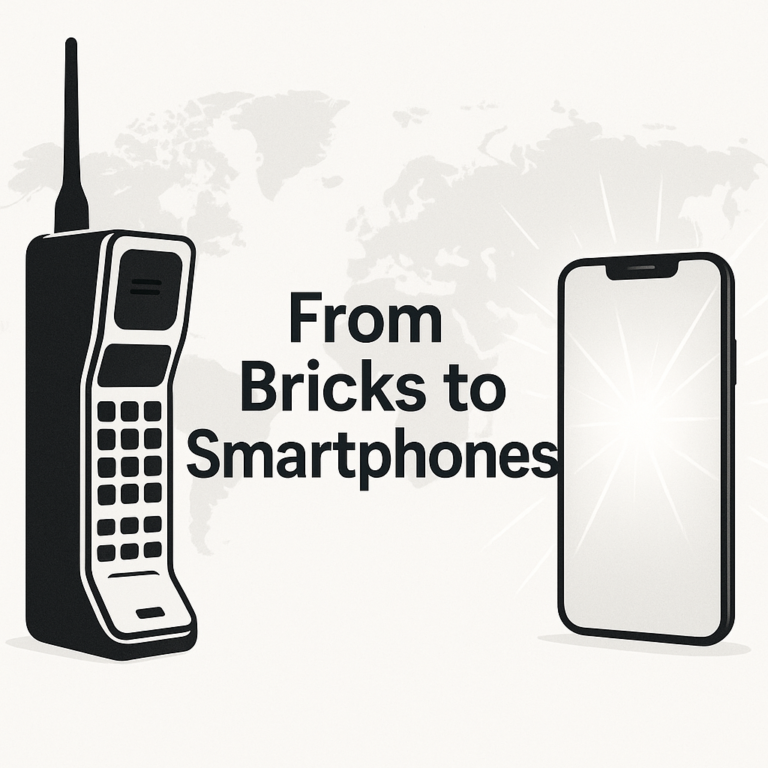
The 2007 launch of the Apple iPhone was a pivotal moment. With its intuitive touch screen, seamless integration of music and web browsing, and access to thousands of downloadable apps, the iPhone turned the concept of a cell phone on its head. Competing manufacturers raced to introduce their own smart phones, ushering in an era characterized by rapid innovation.
Smart phones are now sophisticated handheld computers. They feature high-resolution cameras, advanced navigation systems, and enough processing power to handle graphic-intensive games or business applications. Cloud storage, augmented reality, and artificial intelligence are just a few of the technologies that have become standard for modern smart phones.
Mobile Phones and Global Connectivity
One of the biggest impacts of mobile phones has been the democratization of communication. In many developing countries, mobile phones have leapfrogged fixed-line phones, enabling millions to connect to the world for the first time. According to the GSMA’s 2022 Mobile Economy report, there are more than 5.3 billion unique mobile subscribers worldwide.
This widespread access has far-reaching effects. In sub-Saharan Africa, farmers receive real-time weather updates and market prices via their cell phones. In India, millions use mobile banking to conduct transactions or receive government payments. Even during natural disasters, mobile phones are invaluable tools for communication and coordination.
The Social Media Revolution
Another profound change fueled by smart phones is the dominance of social media. Platforms such as Facebook, Instagram, Twitter (now X), WhatsApp, and TikTok have redefined how people interact and share information. With the majority of their traffic coming from mobile devices, these platforms rely on the widespread popularity of smart phones.
Having a mobile phone in one’s pocket means the ability to share experiences instantly. It is said that “the best camera is the one you have with you,” and for billions, that camera lives in their smart phone. This has led to a world where news, trends, and memes can go viral in minutes, fostering a new era of digital culture.
Mobile Phones and Work: The Rise of the Mobile Workforce
Smart phones are not just about staying in touch with friends and family. They have transformed the modern workplace, enabling remote work, instant messaging, video conferencing, and access to company resources from anywhere. Professionals use smart phones to send emails, manage projects, and even attend virtual meetings.
Apps such as Slack, Zoom, Microsoft Teams, and Google Workspace have made it easier than ever to collaborate in real-time. This flexibility is especially important in a post-pandemic world, where hybrid and remote work arrangements have become the norm.
Mobile Phones and Entertainment
In the realm of entertainment, smart phones are veritable powerhouses. Whether you want to stream the latest movies, catch live sports scores, listen to music, or play games, smart phones offer instant access to a world of content. The App Store and Google Play ecosystems provide millions of games and applications, making mobile devices the preferred platform for digital entertainment.
Mobile gaming, in particular, has exploded. Popular titles like “PUBG Mobile,” “Candy Crush Saga,” and “Among Us” attract millions of players. Music and video streaming apps—Spotify, YouTube, Netflix, and the like—are now pre-installed on many new smart phones, reflecting their central role in personal entertainment.
The Future of Mobile Phones: 5G, Foldables, and Beyond
The rapid pace of innovation in mobile technology shows no sign of slowing down. Fifth-generation (5G) networks, which are rolling out around the world, promise dramatically faster speeds, ultra-low latency, and the capacity to support billions of connected devices. This will unlock groundbreaking new applications, such as ultra-high definition streaming, cloud gaming, autonomous vehicles, and widespread Internet of Things (IoT) adoption.
Another exciting trend is the emergence of foldable smart phones. These devices offer large, tablet-like screens that can be folded to fit in your pocket. Leading brands like Samsung, Huawei, and Motorola have introduced foldable smart phones that combine portability with improved multitasking.
Immersive experiences powered by augmented reality (AR) and virtual reality (VR) are also on the horizon. With mobile devices increasingly serving as gateways to these platforms, the line between physical and digital worlds is becoming ever more blurred.
Security and Privacy: New Challenges
With greater capabilities come greater responsibilities. Mobile phones store vast amounts of personal data, from photos and messages to health information and digital wallets. As such, they have become targets for hackers, scammers, and malware.
Modern smart phones feature biometric authentication, encrypted storage, and advanced privacy settings, but users must remain vigilant. Regular software updates, strong passwords, and judicious use of public Wi-Fi can help protect personal data.
Environmental Considerations and E-Waste
Another growing concern is electronic waste. As consumers replace cell phones every two to three years on average, discarded devices contribute to environmental problems. Manufacturers and governments are increasingly looking to address this issue through recycling programs, longer-lasting batteries, and sustainable production methods. Some brands now offer trade-in and repair programs to encourage re-use and reduce environmental impact.
The Cultural Impact of Mobile Phones
The cultural implications of mobile phones are immense. They have reshaped language—popularizing abbreviations and emojis—and changed the etiquette of social interactions. Some researchers argue that constant connectivity has drawbacks, including digital addiction, reduced attention spans, and erosion of face-to-face communication skills.
However, mobile phones also empower social movements, bringing people together around the world to promote change, share diverse perspectives, and support one another. As American writer William Gibson said, “The future is already here — it’s just not evenly distributed.” The proliferation of mobile phones has brought that future into the hands of billions.
Conclusion: More Than Just a Gadget
Mobile phones have come a long way—from hefty cell phones meant only for emergency business calls to sleek, multifunctional smart phones that sit at the center of our lives. They have bridged distances, democratized information, and empowered people as never before. As we look to the future, it is clear that mobile phones are not just devices—they are gateways to new possibilities, continuing to transform the world in ways that were once unimaginable.
