
The Evolution of Mobile Phones: From Communication Devices to Smart Companions
In the span of a few decades, mobile phones have journeyed from being rare, bulky, and expensive gadgets to becoming essential, ever-present tools integrated into the lives of billions. Today, mobile phones are more than just devices for voice conversation—they are miniaturized computers, our windows to the world, and vital instruments of both work and play. In this expansive overview, we’ll dive deep into the story, technology, and impact of mobile phones, exploring their evolution into the smart phones and cell phones we rely on today.
Mobile Phones: The Early Days
The first generation of mobile phones emerged in the late 20th century, focused primarily on mobility and wireless voice communication. The Motorola DynaTAC 8000X, released in 1983, marked a significant milestone. It weighed nearly two pounds, offered just 30 minutes of talk time, and needed 10 hours to recharge—yet it was a game-changer. Early mobile phones, often called cell phones, relied on analog technology using radio frequency to connect calls through a network of large cell towers, hence the term “cellular phone.”
The technology was cumbersome but revolutionary, freeing users from fixed landlines and giving rise to one of the fastest technological evolutions in history. By the 1990s, technological improvements in battery life, size, and digital signal processing brought mobile phones within the reach of a broader public, setting the stage for mass adoption.
From Cell Phones to Smart Phones: The Digital Revolution
The arrival of the digital age dramatically altered the mobile phone landscape. 2G networks, introduced in the early 1990s, replaced analog signals with digital transmission, enabling features like text messaging (SMS), enhanced call clarity, and improved network security.
Manufacturers began to experiment with designs and new capabilities. Phones like the Nokia 3310 became legendary for their durability and battery life, while features such as monochrome displays, built-in games, and basic tools (alarms, calculators) enriched the user experience.
The pivotal leap occurred in the 2000s with the emergence of smart phones. The legendary BlackBerry devices introduced features aimed at productivity, such as email and calendar syncing. Meanwhile, Palm Treos merged PDAs (personal digital assistants) with cellular connectivity, previewing today’s all-in-one smart devices.
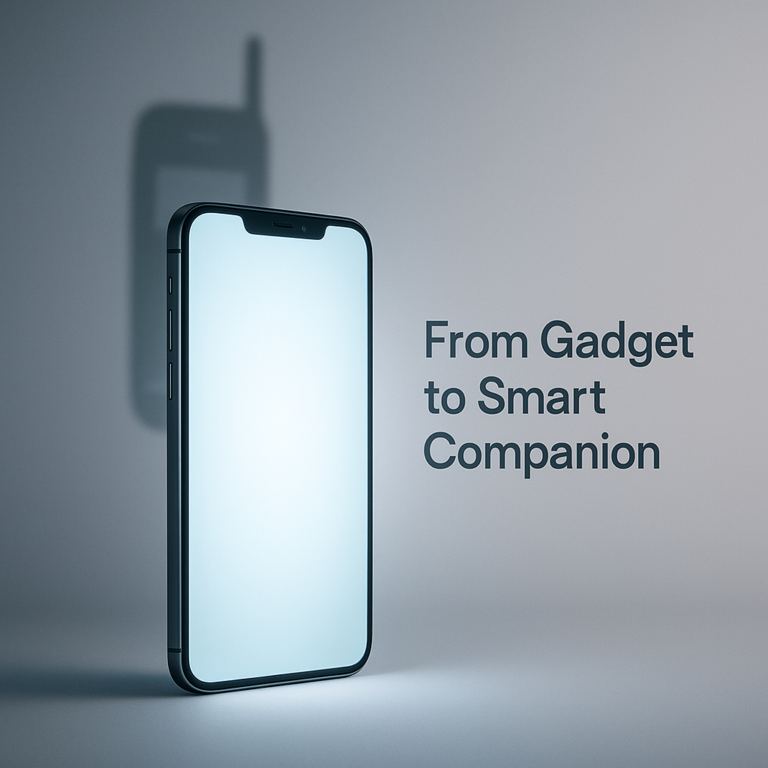
However, the 2007 launch of the Apple iPhone truly redefined the industry. Steve Jobs called it “a revolutionary mobile phone, a widescreen iPod with touch controls, and a breakthrough internet communications device.” The iPhone popularized capacitive multi-touch screens and established a template for modern smart phones—slim form factor, intuitive UI, mobile apps, and robust hardware architectures.
What Sets Smart Phones Apart?
The term “smart phone” describes a mobile phone equipped with an advanced operating system, powerful hardware, and the ability to run a wide range of third-party applications. Unlike basic cell phones, which are primarily for calls and occasionally texting, smart phones serve as communication hubs, entertainment systems, and productivity tools.
Central to the smart phone experience is the app ecosystem. Whether it’s Android’s Google Play Store or Apple’s App Store, users now have access to millions of applications—tools for messaging, gaming, photography, health monitoring, banking, education, and more. This adaptability makes smart phones incredibly versatile and deeply personal.
Smart phones also incorporate advanced sensors and technologies unavailable in earlier cell phones. These include:
– High-definition cameras and video recorders
– GPS modules for navigation and location-based services
– Accelerometers and gyroscopes for gaming and fitness tracking
– Biometric sensors like fingerprint scanners and facial recognition
Modern mobile phones offer integration with cloud services, allowing data synchronization across multiple devices and facilitating remote work, online collaboration, and seamless media consumption.
Connectivity: The Heartbeat of Mobile Phones
All mobile phones rely on connectivity, but the means have changed substantially since the first cell phones. Contemporary devices support a host of wireless standards—2G, 3G, 4G LTE, and most recently, 5G.
5G technology is now reshaping the future of mobile phones, promising ultra-high speeds, lower latency, and impeccable reliability. This opens up new possibilities, from streaming high-quality video content to enabling virtual reality experiences and powering the Internet of Things (IoT).
Alongside cellular connectivity, smart phones today are equipped with Wi-Fi, Bluetooth, and NFC (Near Field Communication), allowing them to connect with local networks, external devices, and digital payment systems. These multifaceted communication capabilities firmly entrench mobile phones at the heart of a hyperconnected society.
Mobile Phones and Social Change
The social impact of mobile phones is profound. According to Pew Research, more than 97% of Americans now own some kind of mobile phone, and globally, over five billion people are connected through mobile devices. This widespread adoption has democratized access to information, enabled real-time communication across vast distances, and created new economic opportunities.
Smart phones have also played pivotal roles in social movements, disaster response, and public health campaigns. During political protests, mobile phones have been crucial tools for organizing, documenting events, and disseminating information. During the COVID-19 pandemic, contact tracing apps and instant access to news updates showcased how crucial mobile technology is in addressing global challenges.
Mobile Phones and Everyday Life
For most people, mobile phones have seamlessly integrated into daily routines. Commuters use navigation services, music streaming, and productivity apps during their travels. Students access online textbooks and participate in remote learning. Families and friends bridge physical distances through video calls, instant messages, and social media.
Smart phones serve as digital wallets, allowing users to make payments, manage finances, and transfer funds with a tap. Health enthusiasts track workouts, monitor sleep patterns, and even perform EKGs. For the visually or hearing-impaired, accessibility features like screen readers and voice commands open doors previously closed by technological barriers.
Photographers and influencers have leveraged the ever-improving cameras in modern mobile phones to create astonishing visuals, driven by AI-powered enhancements and computational photography.
As Bill Gates put it: “The cell phone is becoming the universal remote control for our lives.”
The Downsides: Distraction, Privacy, and E-Waste
Despite their many advantages, mobile phones are not without their drawbacks. Smart phones, particularly, have raised concerns about distraction and addiction. The incessant alerts, endless scrolling, and app notifications have been linked to decreased attention spans and disrupted sleep.
Privacy and security represent ongoing challenges. The vast amount of personal data stored on mobile phones—photos, messages, location history, and financial information—makes them attractive targets for cybercriminals. Consumers and regulators continuously grapple with questions around data collection, surveillance, and digital rights.
Environmental impact is another concern. E-waste generated by discarded cell phones threatens ecosystems, while the mining of rare earth minerals for batteries and chips often involves environmentally and ethically problematic practices. Efforts are underway to promote recycling, eco-friendly manufacturing, and longer product lifespans, but challenges remain.
The Road Ahead: What’s Next for Mobile Phones?
As technology continues to evolve, the line between mobile phones and other digital devices blurs even further. Foldable smart phones, wearable tech, and advancements like augmented reality are redefining what our personal devices can do.
Artificial intelligence is making mobile phones smarter—anticipating users’ needs, enhancing photography, and powering real-time translation. Battery technology, display innovation, and ultra-fast processors promise devices that are more capable yet energy-efficient.
Some experts foresee a future where smart phones serve as the digital “hub” for connected homes, cars, and workspaces, seamlessly controlling everything from appliances to entertainment systems.
Yet, the core appeal of mobile phones remains unchanged: the ability to connect people, empower individuals, and bridge the gaps in society. In the words of Martin Cooper, inventor of the first portable cell phone, “People want to talk to other people—not a house, or a desk, or a car. Given a choice, people will demand the freedom to communicate wherever they are, unfettered by the infamous copper wire.”
Conclusion
From their humble beginnings as voice-only communicators to today’s powerful smart phones, mobile phones have transformed our world in countless ways. As indispensable digital partners, they support our work, relationships, education, and entertainment—reshaping entire industries and redefining the human experience. As we look to the future, it’s certain that mobile phones will continue to evolve, innovate, and inspire, remaining at the heart of our connected lives for generations to come.
